£283.00 Volume discounts available
Note: Fees (prices) on this site are in GBP and do not include carriage / handling fees and VAT. Customers outside the UK may also incur local charges, including (but not limited to) import duties, local taxes and customs clearance fees, which may add significant cost to your order. Prices here are for the PT round or QC / Reference Material only and the total price payable may be higher.
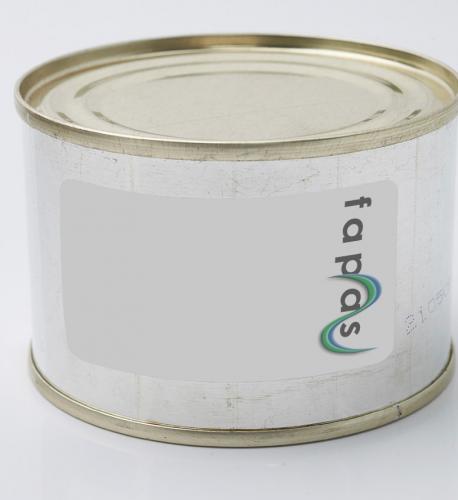
| Product Code | Proficiency Test | Matrix | Approx. Size |
|---|---|---|---|
|
FCCM46-SEA6
|
07660 |
Crab Meat (heat treated can/pouch) |
150 g |
Arsenic (total), Arsenic (inorganic), Cadmium, Lead, Mercury (total), Methyl Mercury
all natural levels. Organic Arsenic species if present (e.g. Arsenobetaine(AB), Methylarsonic acid(MA), Dimethylarsonic Acid(DMA) tbc). Organic Arsenic species are not currently within scope of ISO 17043 accreditation.
This proficiency test will allow you to evaluate your testing ability for a range of trace elements within canned crab meat. From this valuable areas of improvement can be found, as well as demonstrating your testing standards to regulators, and customers if required.
Contaminants are often found in food, either as a natural contaminant or a contaminant from production. Trace elements in foodstuffs are not always toxic, but should be strictly controlled. Many metals in trace quantities can prove beneficial when consumed; as such it is important to quantify accurately the levels of these analytes within grapefruit puree to allow customers to make well informed and correct purchasing decisions.
Canned foods may also be at higher risk of contamination due to non-intentionally added substances being present within the crab meat, due to packaging migration. To allay this risk, accurate testing abilities are required to protect the consumer from potentially harmful foodstuffs.
Proficiency Testing measures from Fapas challenge your laboratories to ensure only high quality testing practises are used. This is achieved through the use of real food matrices, from which to provide direct comparisons with your routine analysis activities. This ensures any areas for improvement are clear and able to action in an efficient manner. Through the use of Fapas proficiency tests your overall testing ability can be benchmarked, from which to inform your wider quality control activities.