£108.00 Volume discounts available
Note: Fees (prices) on this site are in GBP and do not include carriage / handling fees and VAT. Customers outside the UK may also incur local charges, including (but not limited to) import duties, local taxes and customs clearance fees, which may add significant cost to your order. Prices here are for the PT round or QC / Reference Material only and the total price payable may be higher.
| Product Code | Proficiency Test | Matrix | Approx. Size |
|---|---|---|---|
|
BLPM1-MRP64
|
02688b |
Blank Pig Kidney |
40 g |
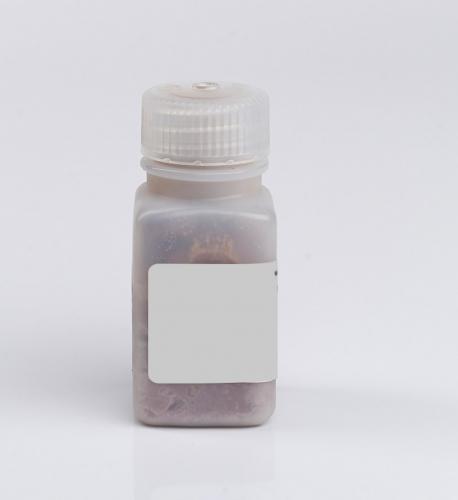
Blank Material
This round cannot be purchased on its own, it is only available in conjunction with the similarly numbered vet. drug residue round. Blank matrix samples are available to purchase with many of the proficiency test materials. Every effort has been made to ensure these do not contain the target analytes at concentrations that would compromise the nature of the proficiency test. Other analytes may be present. NB: Blank materials are not part of the proficiency test per se and so are not included in our scope of accreditation to ISO/IEC 17043.
Pork continues to be globally consumed in large quantities, giving supply chains and food testing laboratories challenges to maintain safe produce offered to the consumer.
Sulfonamides make up a significant proportion of veterinary medicines, and as such effectiveness of detection and quantification is key to promote safe foodstuffs for consumption. With a non-targeted detection method needed, key challenges of laboratory testing abilities can be made using proficiency testing to effectively evaluate your capabilities in a simulated environment.
Trimethoprim is a diaminopyrimidine antimicrobial agent which is effective against a wide range of Gram-positive and Gram-negative organisms. In veterinary medicine, trimethoprim is commonly used in combination with sulphonamides. This is because they work synergistically, inhibiting two separate, sequential steps in bacteria. This combination is more effective than either drug alone because it blocks the pathway at two points, making the antibiotics bactericidal (killing bacteria) rather than just bacteriostatic (preventing bacteria from reproducing).
As with other antimicrobial agents there is concern that consumption of food containing trimethoprim may lead to strains of resistant bacteria being formed, therefore Trimethoprim is monitored has its own maximum residue limit.
Macrolides are broad spectrum antibiotics often used to treat gram-positive bacterial infections in a wide variety of food-producing animals. They are used to treat both systemic and local infections and are often regarded as alternatives to penicillins for treatment of streptococcal and staphylococcal infections. They have the advantage of producing less inflammatory effects than other drugs. Veterinary drug residues are monitored to control the emergence of antimicrobial resistance (AMR) in bacteria, prevent environmental contamination and assess effectiveness or potential for adverse effects in animals. To regulate their use in the EU, the Commission has set maximum residue limits (MRLs) in animal-derived food products. Monitoring for compliance with such limits has produced the need for analytical methods to measure these drugs at trace residue levels.
Animal products for human consumption are tightly legislated and closely monitored for compliance. Veterinary medicines used in animals are likely to have a pharmacological effect in humans. Hence, for many veterinary medicines, there are extremely low maximum residue limits or even no MRL (i.e. any detection is non-compliant). The Fapas proficiency test materials are produced in keeping with EU MRLs or minimum required performance limit (MRPL) where MRLs are not set. The result reporting requirements are also in keeping with quality control guidelines laid out in EC/657/2002.
This blank material is ideal to ensure effective calibration curves are created. This can ensure only high quality test results are found. Blank materials from Fapas are ideal for ensuring matrix matching takes place. By using blank materials as close to positive test samples as possible the matrix effect is dramatically reduced.
Blank materials from Fapas make use of real food matrices to provide the key insights into your routine testing abilities you require. These can be used to maintain the level of accuracy required to satisfy both your customers and regulators of your testing capabilities.